The big bang was not an explosion, by the way (The show, however, was).
Quantum Mechanics Part two.
…no math i promise 🤞
Schrödinger’s equation
It isn’t really possible to derive the Schrödinger equation from classical physics. In my textbook (David J. Griffiths), and in a bunch of others, it just kind of appears, and then they show that it works.
I know what you’re thinking—it had to come from somewhere. It is possible to derive the equation without using anything passed calculus 2 (or calculus 3, if you want to be cool). But I did promise no math… unless you’re interested.
Here’s the equation of the hour
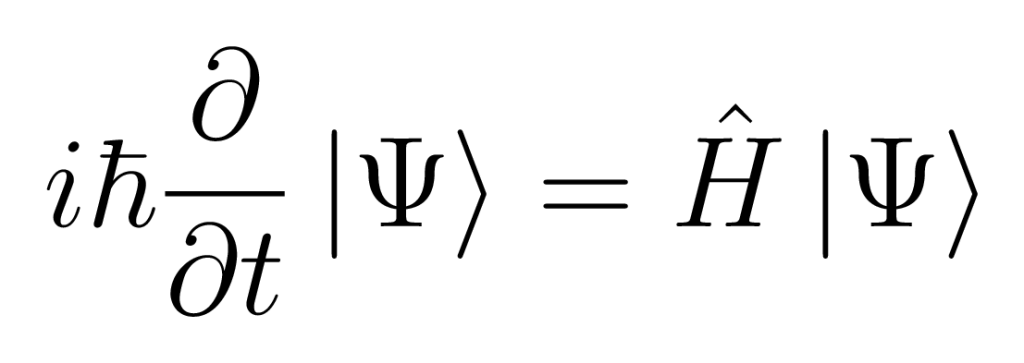
Weirdly, the equation is complex: goes to show how strange things get at the subatomic level (and sometimes even macroscopically, if you check out the latest Nobel Prize in Physics). The ĥ is the reduced Planck constant. The in front is the state vector – in bra-ket notation, it’s a ket here. And the H is the Hamiltonian operator (think of it as a machine that transforms the state vector).
I might continue with this or our “If you didn’t know, now you do” series so the blog continues to be fun.

Test 2
Infinity is not a number, by the way.
Quantum Mechanics
Let’s use our pym particles to shrink into the microverse……
At this level, physics becomes weird— really weird. The laws governing our classical (regular) world breaks down. We will need a new system— new mechanics if you will— to make “predictions”(lol, you’ll soon see why this is funny). Why do we need a new framework you ask?….
The Ultraviolet catastrophe
There’s something caed the “black-body radiation” (funny name lol). It just means the energy emitted by an object naturally. Essentially, the natural response of an object with a lot of energy. A black-body is a perfect absorber and emmiter of thermal energy.

It is a priori that the higher the frequency of a particle, the higher energy it should emmit. Because energies correspond to frequencies. However, this is not the case it would mean that particles with frequencies in the UV range would have a near infinite amount of energy. This will suggest that heating a metal to a high enough temperature may cause gamma rays to be emmited.
Max Planck resolved this problem by assuming Energy was not continuously absorbed/emmited, but in discrete chunks(called quanta). So
Energy=nhf
Where h is Planck constant, f is the frequency, and n is an integer.
Schrödinger
With the development of this new framework arose the need to have equations that can make predictions(again, lol). Just as Newton developed his Newtonian framework with Force and mass. However, things are a little different in Quantum Mechanics. Here, we need to work with operators. Scrodinger’s equations makes use of the energy operator specifically.
Pause. Not sure if I want to go into the nit and grit of this stuff: Eigen functions, Fourier Analysis, interfermometers etc.
A little Little About Black Holes
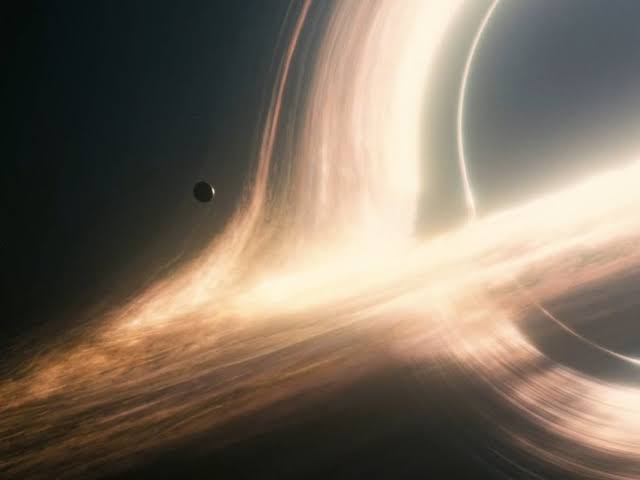
Hey there! Let’s talk about one of the coolest things in the universe – black holes! They’re these crazy, massive objects that are formed when giant stars collapse under their own gravity. And what’s really wild is that they’re so powerful, they create a region of space where even light can’t escape. That’s right, black holes are basically like giant vacuum cleaners in space!
The event horizon is a key feature of black holes. It’s the boundary around the black hole that marks the point of no return. Anything that crosses that boundary is gone for good – it’s trapped inside the black hole forever. And you know what’s even crazier? At the center of a black hole is a point of infinite density called the singularity. We have no idea what goes on in there because our current understanding of physics can’t explain it.
There are actually three types of black holes – stellar, intermediate, and supermassive. Stellar black holes are formed from a single massive star collapsing, while intermediate black holes come from the merging of multiple smaller black holes. And supermassive black holes are found at the center of most galaxies, including our own Milky Way.
When matter falls into a black hole, it forms an accretion disk – a swirling mass of gas and dust around the black hole. This disk can get really hot and emit tons of radiation that astronomers can observe. It’s pretty wild to think that we can detect radiation from something that’s supposed to be invisible!
One of the most mind-blowing things about black holes is their entropy. Basically, entropy is a measure of the disorder or randomness of a system. And the entropy of a black hole is proportional to its surface area, so the bigger the black hole, the more entropy it has. That means black holes are actually some of the most ordered objects in the universe – even though they seem totally chaotic!
Black holes are some of the most intriguing objects in the universe, and our understanding of them is constantly evolving. While we still have much to learn about black holes, they have already provided valuable insights into the nature of space-time, gravity, and the laws of physics. With further study, we may one day unlock the secrets of these enigmatic objects and gain a deeper understanding of the universe in which we live.
Waves
…but not the type you might be thinking.

Waves are all around us – we see them in the ocean, hear them in the form of sound, and even feel them as earthquakes. But what exactly are waves, and how do they work?
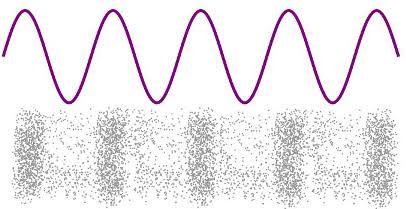
In physics, a wave is a disturbance that travels through space and time, usually accompanied by a transfer of energy. There are many different types of waves, including mechanical waves and electromagnetic waves.
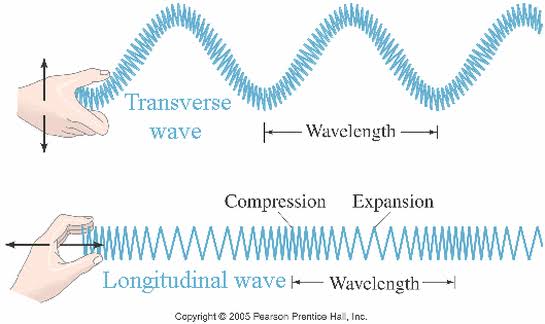
courtesy of waves forever
Mechanical waves are waves that require a medium – a substance through which the wave can travel. Examples of mechanical waves include sound waves, which travel through air or other gases, liquids, or solids, and surface waves, which travel along the surface of a liquid.
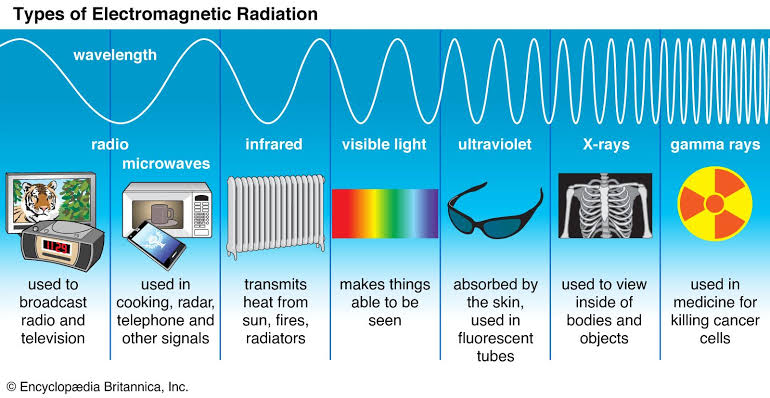
Encyclopaedia Britannica
Electromagnetic waves, on the other hand, do not require a medium to travel through. Examples of electromagnetic waves include radio waves, microwaves, infrared radiation, visible light, ultraviolet radiation, X-rays, and gamma rays.
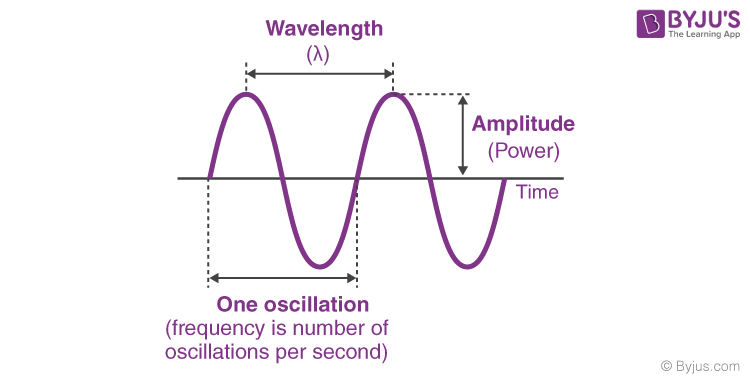
One important property of waves is their frequency, which is the number of wave cycles that pass a fixed point in a given time period. The unit of frequency is the Hertz (Hz), which represents one wave cycle per second. The frequency of a wave determines its pitch – for example, a high-frequency sound wave will have a high pitch, while a low-frequency sound wave will have a low pitch.
Another important property of waves is their amplitude, which is the maximum displacement of the wave from its equilibrium position. The amplitude of a wave determines its intensity or strength – for example, a high-amplitude sound wave will be louder than a low-amplitude sound wave.
Waves can also interfere with each other, resulting in constructive interference (when the waves reinforce each other) or destructive interference (when the waves cancel each other out). This can lead to interesting patterns such as standing waves and beat frequencies.
In conclusion, waves are a fundamental aspect of the physical world, and understanding their properties and behaviours can give us insights into a wide range of phenomena. Whether we are listening to music, using a cell phone, or watching a light show, we are interacting with waves in one way or another.
If you didn’t know, now you do.
Have you ever really touched anything?

It may seem counterintuitive, but despite the fact that we interact with objects in the physical world on a daily basis, we have never actually “touched” anything in the sense of coming into direct contact with another object. This is due to the phenomenon of electron repulsion, which is a fundamental aspect of the nature of matter.
At the most basic level, all matter is made up of atoms, which are composed of a nucleus containing protons and neutrons, surrounded by a cloud of electrons. These electrons are responsible for the chemical and physical properties of an atom, as well as its interactions with other atoms. When two atoms come into close proximity to one another, their electron clouds begin to overlap, and the electrons within each atom repel each other due to their negative charge. This creates a repulsive force between the two atoms, which prevents them from actually coming into contact with each other.
This repulsive force is what allows us to “touch” objects and interact with them in the physical world. When we pick up a pen or tap a keyboard, for example, our fingers do not actually come into contact with the surface of the object. Instead, the repulsive force between the electrons in our fingers and the electrons in the object prevent us from physically touching it.
In summary, we have never really touched anything because of electron repulsion. This fundamental aspect of the nature of matter creates a repulsive force between atoms, which prevents them from coming into direct contact with each other. This is what allows us to interact with objects in it.
If you didn’t know, now you do.
Is the sun on fire?
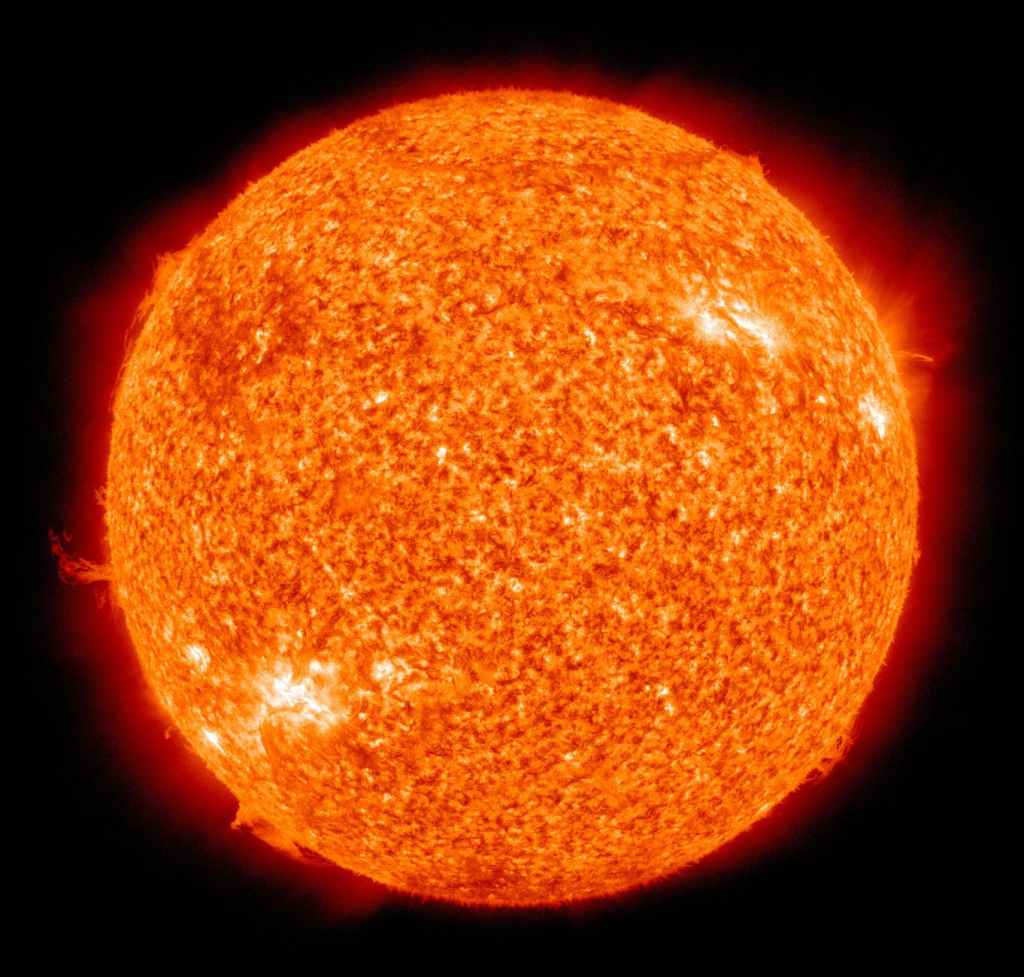
No, the sun is not on fire. The sun work by a process called Thermonuclear Fusion.
The process works only due to the sun mass. The sun is massive and as a result, the sun severely distorts space and time. The result of this distortion is the phenomenon of gravity.
The sun works by squeezing Hydrogen atoms together so that they fuse and form helium releasing energy in the form of heat and light.
Weird questions you didn’t think you wanted the answer to.
In a zero-gravity environment with an atmosphere similar to Earth’s, how long would it take air friction to stop an arrow?

In comparison to a regular physics problem, this scenario is backward. We normally consider gravity and neglect air resistance.
Unsurprisingly, air resistance would slow down an arrow, stopping it—after flying really far.
Assuming you fire an arrow at 85m/s. That’s about twice as fast as a major league fastball, but a little under the 100m/s speed of arrows from good compound bows.T
The arrow would slow down relatively quickly. Air resistance is directly proportional to the speed squared, which means the arrow would experience a lot of drag when going fast.
After 10 seconds of flight, the arrow would have traveled about 0.4 km, and the speed would have dropped from 85m/s to 25m/s. This is close to how fast a regular person can throw an arrow.
At that speed, the arrow would be way less harmful.
By my calculations the arrow should fly no more than 10 meters.
If you didn’t know, now you do.

What’s a Second?
A second is how long it takes an outer electron of Cesium-133 atom to go from ground state to excited state 9,192,631,770 times.
In other words, it is the time taken for that electron to oscillate between orbitals 9,192,631,770 times
 Daily Physics